
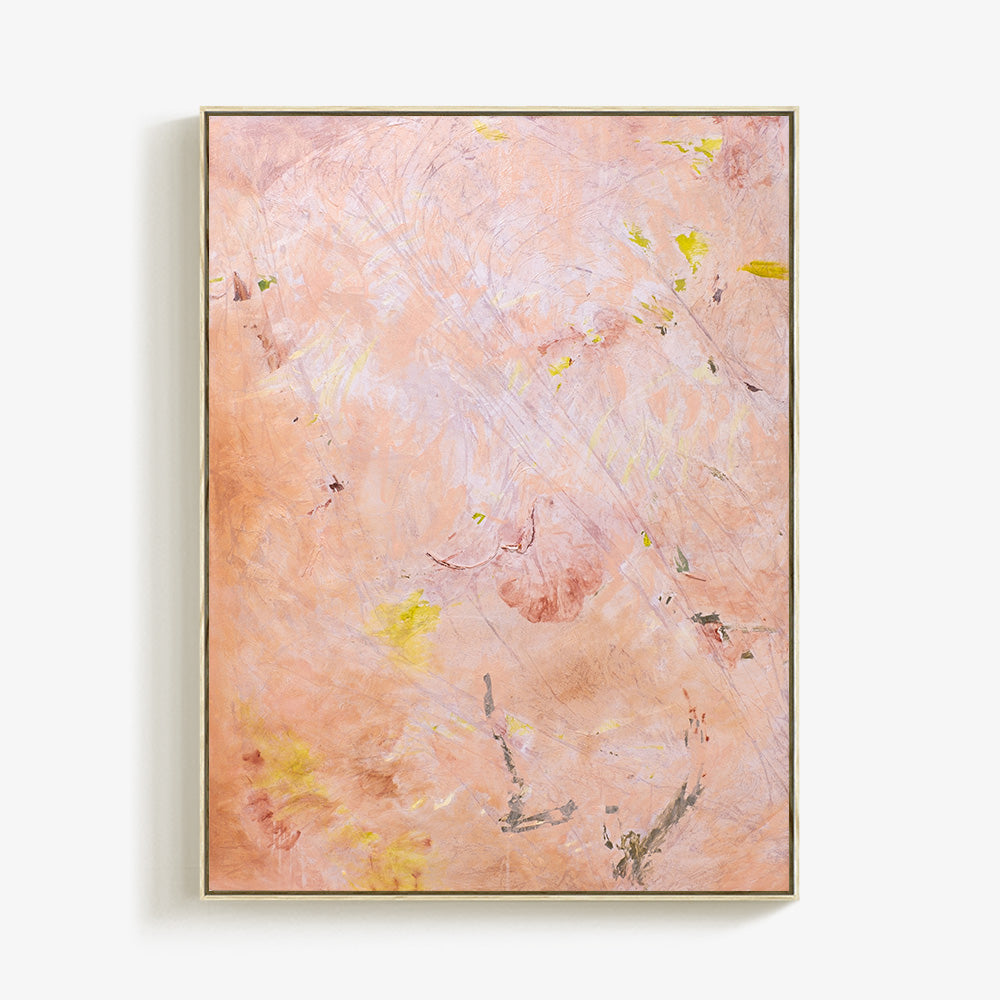


My Wild Heart
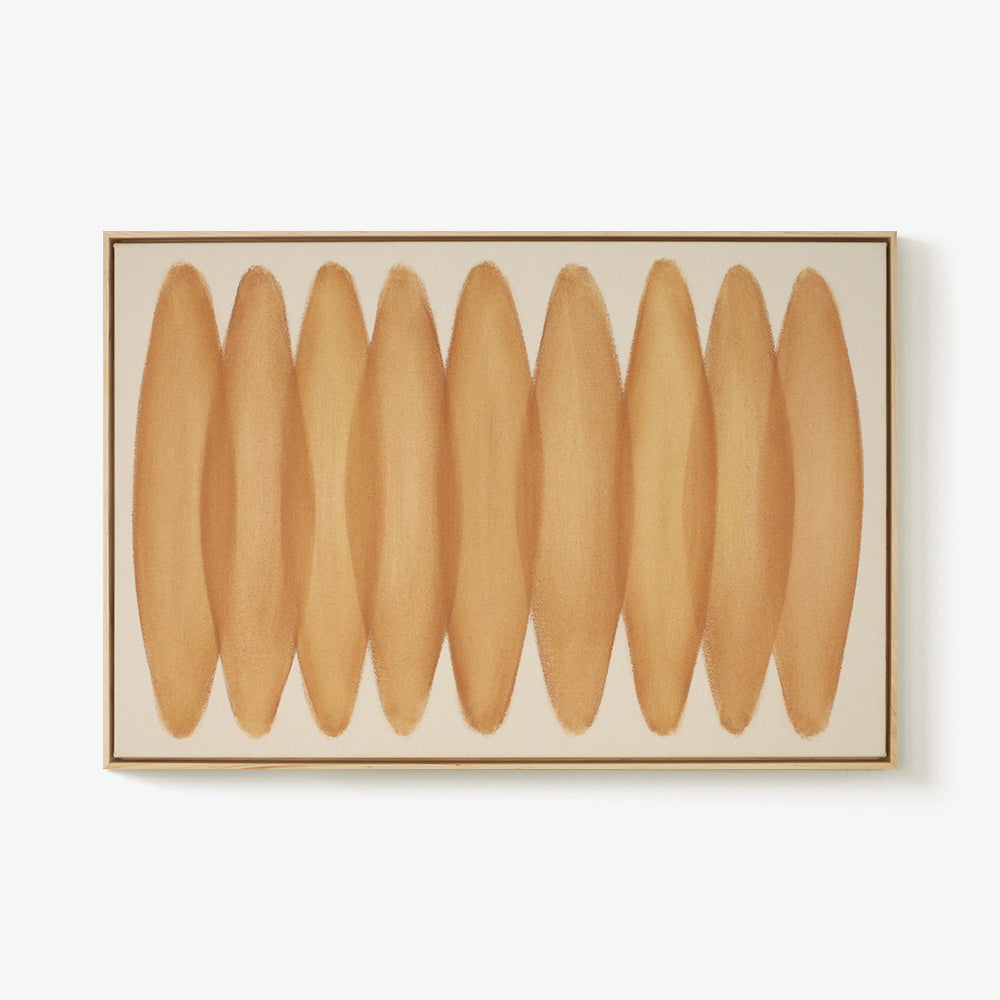
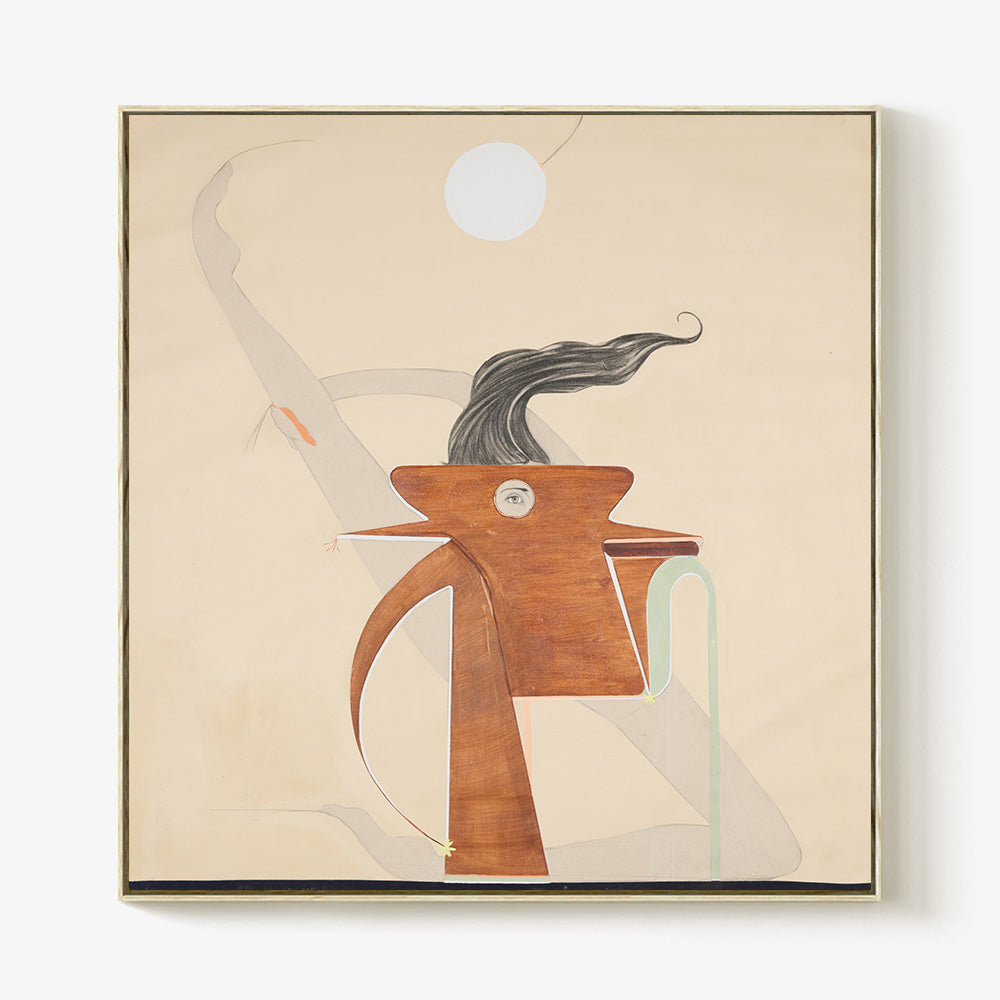
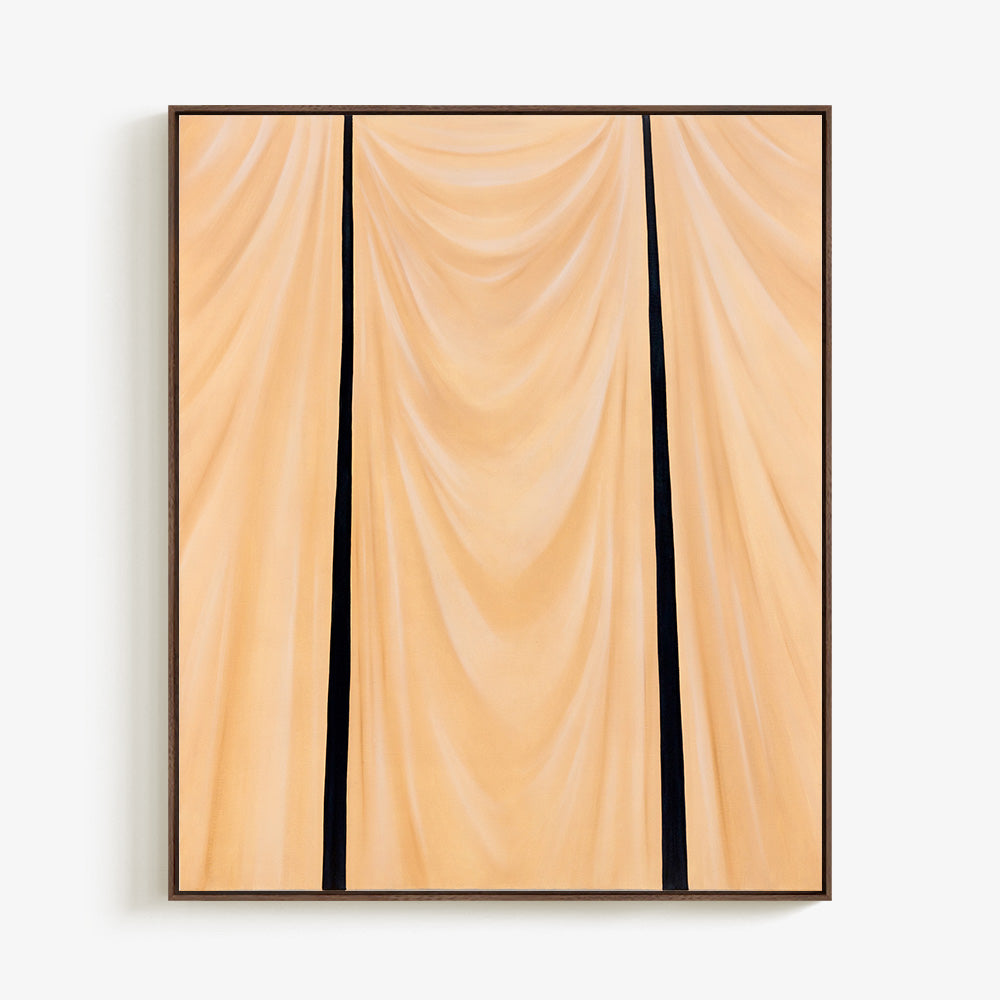
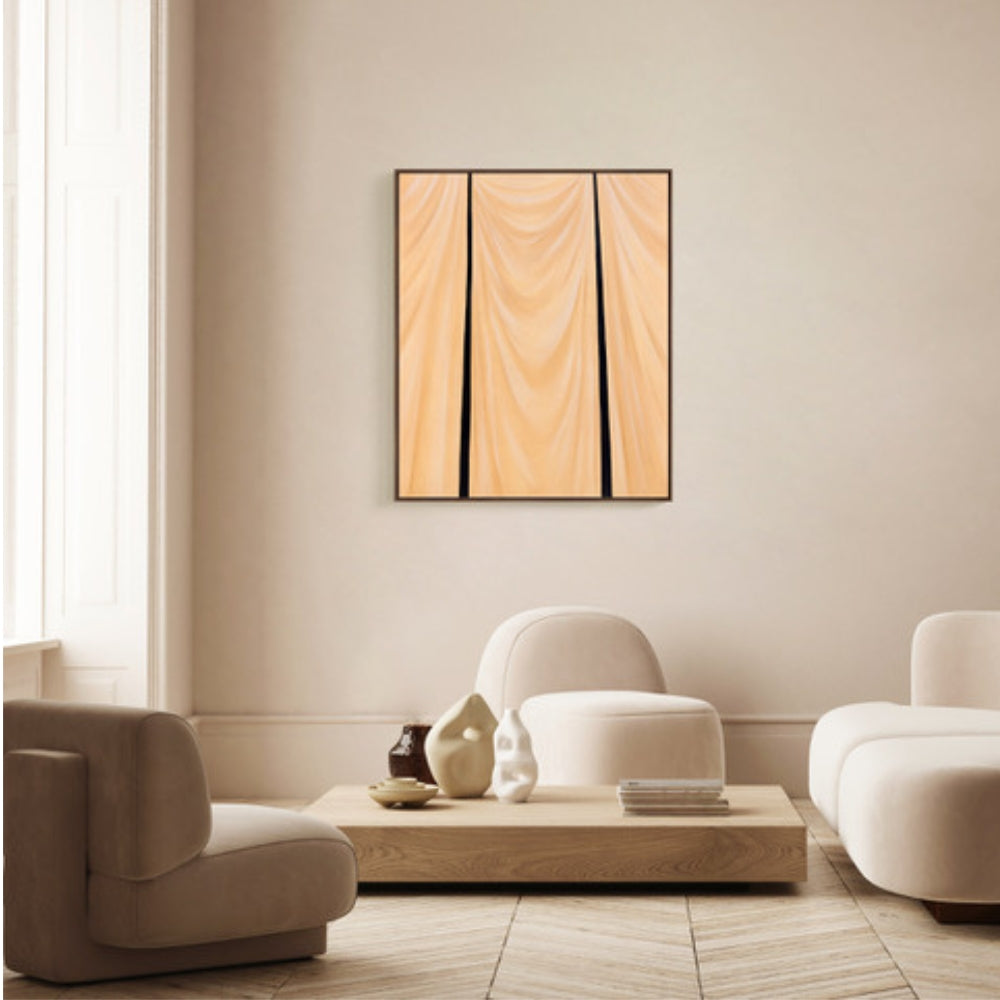
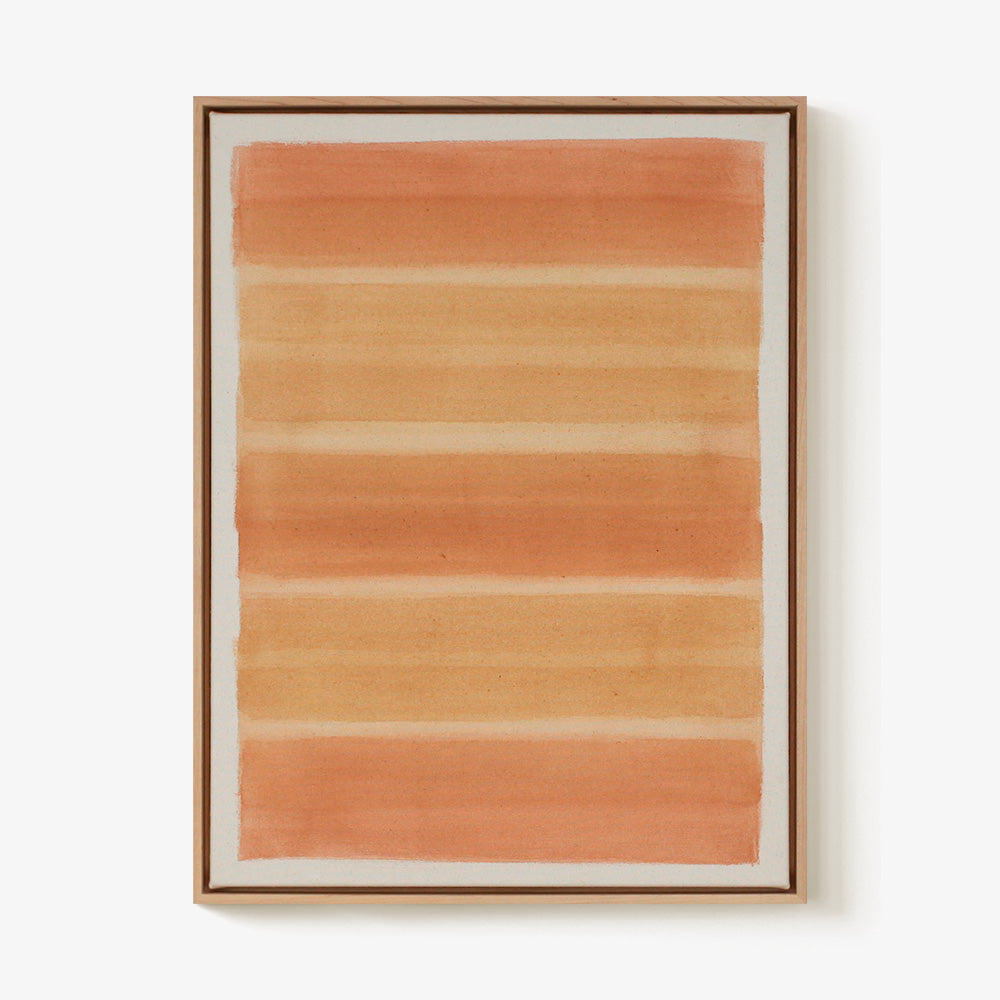
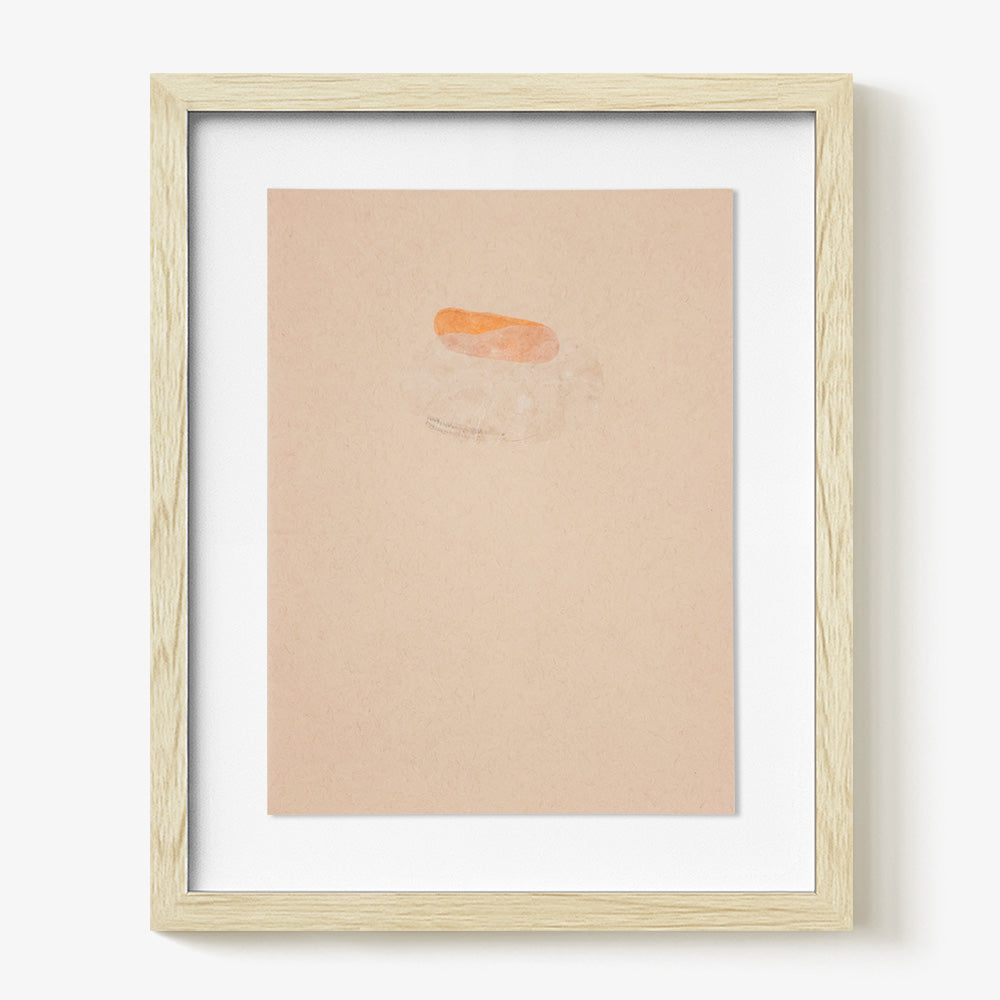
Acrylic, plastic on canvas
In What If We Joined Our Wildernesses Together?, Gabriel Guthrie explores the generative potential of seemingly opposing forces and the ways in which contradiction can deepen, rather than diminish, our understanding of experience. The series emerged from a visit to the Teshima Art Museum in Japan, where artist Rei Naito and architect Ryue Nishizawa conceived a space that exists as both open and closed, connecting art, architecture, and nature through an experience centered on the joy of living. During the same trip, Guthrie was reading Ross Gay’s The Book of Delights, a meditation on finding delight not apart from grief, difficulty, and loss, but alongside them. Gay’s question, “What if we joined our wildernesses together?”, became a point of departure for the collection, prompting Guthrie to consider what becomes possible when apparent opposites are understood not as competing forces, but as interconnected and mutually expansive.
Across seventeen works, Guthrie gives physical form to these ideas through juxtapositions of color, material, process, and composition. Green sits alongside red; water interacts with oil paint; additive gestures meet subtractive ones; concealed layers coexist with exposed surfaces; and restrained marks emerge against richly tactile passages. Each painting begins with a monoprinting process using plastic, producing delicate and unpredictable textures that evoke both the natural and the constructed, before layers of paint, oil pastel, and oil stick introduce a balance of intuition, intention, and chance. Several works extend across multiple canvases, with each component retaining its individual identity while simultaneously contributing to a larger whole. Through this interplay of separation and connection, Guthrie considers the subtle forces that shape relationships and the possibility that distinct entities—and seemingly contradictory states—can remain fully themselves while becoming something more through their entanglement.


YOU HAVE VIP EARLY ACCESS TO THIS ARTWORK | VIEW MORE
This service is currently unavailable,
sorry for the inconvenience.
Pair it with a frame
Frame options are for visualization purposes only.
FRAME STYLE
MATTING SIZE
BUILDING YOUR EXPERIENCE
powered by Blankwall
Take a few steps back and let your camera see more of the scene.
powered by Blankwall
Was this experience helpful?

In What If We Joined Our Wildernesses Together?, Gabriel Guthrie explores the generative potential of seemingly opposing forces and the ways in which contradiction can deepen, rather than diminish, our understanding of experience. The series emerged from a visit to the Teshima Art Museum in Japan, where artist Rei Naito and architect Ryue Nishizawa conceived a space that exists as both open and closed, connecting art, architecture, and nature through an experience centered on the joy of living. During the same trip, Guthrie was reading Ross Gay’s The Book of Delights, a meditation on finding delight not apart from grief, difficulty, and loss, but alongside them. Gay’s question, “What if we joined our wildernesses together?”, became a point of departure for the collection, prompting Guthrie to consider what becomes possible when apparent opposites are understood not as competing forces, but as interconnected and mutually expansive.
Across seventeen works, Guthrie gives physical form to these ideas through juxtapositions of color, material, process, and composition. Green sits alongside red; water interacts with oil paint; additive gestures meet subtractive ones; concealed layers coexist with exposed surfaces; and restrained marks emerge against richly tactile passages. Each painting begins with a monoprinting process using plastic, producing delicate and unpredictable textures that evoke both the natural and the constructed, before layers of paint, oil pastel, and oil stick introduce a balance of intuition, intention, and chance. Several works extend across multiple canvases, with each component retaining its individual identity while simultaneously contributing to a larger whole. Through this interplay of separation and connection, Guthrie considers the subtle forces that shape relationships and the possibility that distinct entities—and seemingly contradictory states—can remain fully themselves while becoming something more through their entanglement.
Artwork Information
Year
2026
Materials
Acrylic, plastic on canvas
Authentication
Signed by Artist
The work comes with a Certification of Authenticity signed by the Co-Founder of Tappan.
Dimensions
ARTWORK DIMENSIONS
48 x 36 inches
FRAMED DIMENSIONS
48 x 36 inches
Reveal: 49 x 37 x 2 inches
Unframed: 48 x 36 inches
Custom Orders
We offer a wide variety of custom framing options, please reach out for more information.
Shipping times vary per artwork, text, email, or chat with us to expedite shipping.
text: 310-388-3425
email: info@thetappancollective.com
Art Advising Services
Complimentary art advising services available on request. More info here
"I am interested in forms of knowledge that do not undermine my process of becoming. I discover the truth of my paintings the same way I come to understand myself: through curiosity, experimentation, and play, through sustained attention, and through trusting what emerges rather than forcing resolution."

About the Artist
Gabrielle Guthrie
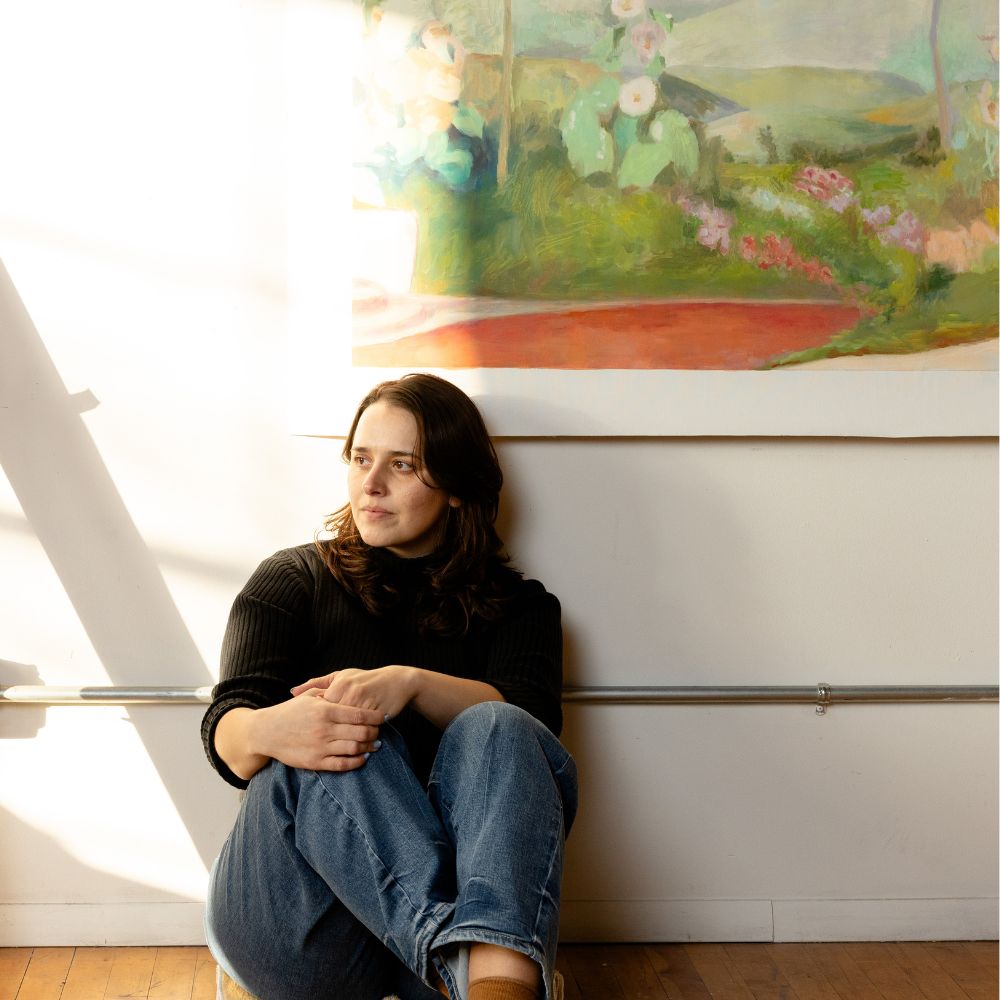
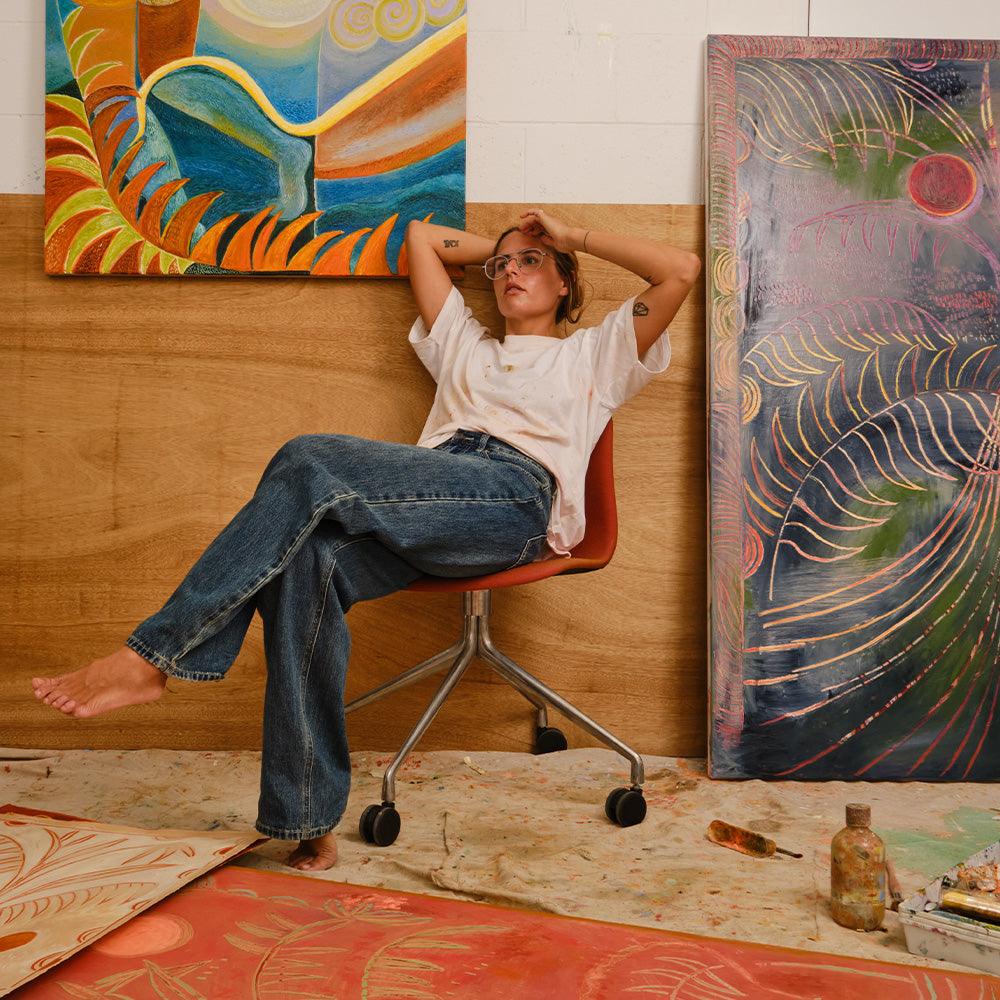
Gabrielle Guthrie is an abstract painter in NYC whose work combines intuitive and organic forms with repurposed materials to explore how we create, consume, and connect with the social, built, and natural environments. The artist's process-driven approach embraces improvisation, layering, and material play. Guthrie holds an MFA in Product Design from Stanford, and her background as a designer and user researcher informs her artistic practice. Guthrie's work has been recognized by Saatchi and is held in private collections worldwide including in London, New York, California, and Texas.
Choose options
This service is currently unavailable,
sorry for the inconvenience.
Pair it with a frame
Frame options are for visualization purposes only.
FRAME STYLE
MATTING SIZE
BUILDING YOUR EXPERIENCE
powered by Blankwall
Take a few steps back and let your camera see more of the scene.
powered by Blankwall
Was this experience helpful?
In What If We Joined Our Wildernesses Together?, Gabriel Guthrie explores the generative potential of seemingly opposing forces and the ways in which contradiction can deepen, rather than diminish, our understanding of experience. The series emerged from a visit to the Teshima Art Museum in Japan, where artist Rei Naito and architect Ryue Nishizawa conceived a space that exists as both open and closed, connecting art, architecture, and nature through an experience centered on the joy of living. During the same trip, Guthrie was reading Ross Gay’s The Book of Delights, a meditation on finding delight not apart from grief, difficulty, and loss, but alongside them. Gay’s question, “What if we joined our wildernesses together?”, became a point of departure for the collection, prompting Guthrie to consider what becomes possible when apparent opposites are understood not as competing forces, but as interconnected and mutually expansive.
Across seventeen works, Guthrie gives physical form to these ideas through juxtapositions of color, material, process, and composition. Green sits alongside red; water interacts with oil paint; additive gestures meet subtractive ones; concealed layers coexist with exposed surfaces; and restrained marks emerge against richly tactile passages. Each painting begins with a monoprinting process using plastic, producing delicate and unpredictable textures that evoke both the natural and the constructed, before layers of paint, oil pastel, and oil stick introduce a balance of intuition, intention, and chance. Several works extend across multiple canvases, with each component retaining its individual identity while simultaneously contributing to a larger whole. Through this interplay of separation and connection, Guthrie considers the subtle forces that shape relationships and the possibility that distinct entities—and seemingly contradictory states—can remain fully themselves while becoming something more through their entanglement.